Dmitri Soloviev
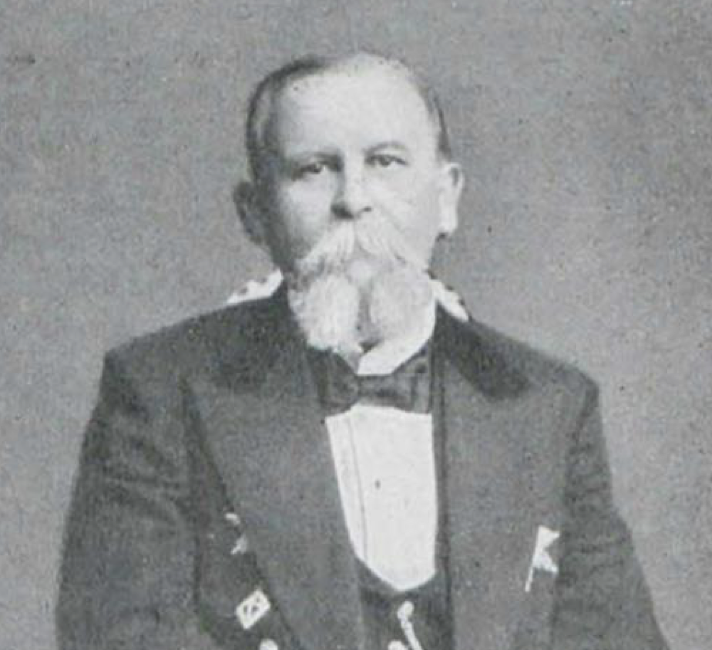
Dmitri Nikolayevich Soloviev
21.09/03.10.1843 — 21.12.1909/03.01.1910. Russian church composer, teacher, Director of the Chancery of the Ober-Procurator of the Holy Synod (1896—1909), Privy Councillor.
1857—1863
Studied at the Yaroslavl Theological Seminary.
In Yaroslavl he met the renowned choral conductor and composer Prince Yuri Golitsyn, who influenced his formation as a musician.
1871
Graduated from the Faculty of History and Philology of the Imperial Saint Petersburg University.
During his studies he worked with the student choir, which he continued to direct after graduation.
After leaving university he worked as a Latin teacher at the 1st Gymnasium.
1886—1890
Inspector and Russian-language teacher at the 3rd Saint Petersburg Gymnasium.
1890—1895
Headed the 6th Gymnasium. He founded a choir and an orchestra of students.
1893
For a manuscript essay on the history of music in Russia he was awarded the title of member of the Music Academy of Saint Cecilia in Rome.
From 1896
He agreed to take the post of Director of the Chancery of the Ober-Procurator of the Holy Synod, after repeated insistent invitations from K. Pobedonostsev.
21.12.1909 / 03.01.1910
Died and was buried at the cemetery of the Alexander Nevsky Lavra.
The most fruitful field of Dmitri Nikolayevich’s activity was composition, comprising harmonic arrangements of traditional chants as well as his own sacred and secular works.
His original sacred works include chants from various liturgical orders. He is the author of a Liturgy in the Ancient Chant.
He devoted much attention to the ancient chants, working on settings of znamenny, Greek, and Kyivan chants.
As an outstanding expert, he compiled a catalogue of the kryukovye (neumatic) chant books held at the library of the Saint Petersburg Theological Academy. He also worked extensively on the Greek text of the liturgical books and on comparing it with the Slavonic translation, which he regarded as exceptionally close to the original.
He authored educational manuals and courses on church singing, as well as numerous articles and reviews.
He treated the traditional chants with sensitivity and care, preserving them in their original form (with rare exceptions).
Soloviev’s harmonisations remain in demand on the kliros to this day.
Pieces by this composer
- Антыфон І на Раство Прасвятой Багародзіцы — Znamenny chant, Dmitri Soloviev, Тарас Чыж ( PDF , MP3 )
- Антыфон ІІ на Раство Прасвятой Багародзіцы — Znamenny chant, Dmitri Soloviev, Тарас Чыж ( PDF , MP3 )
- Адзінародны Сыне — Dmitri Soloviev ( PDF , MP3 )