
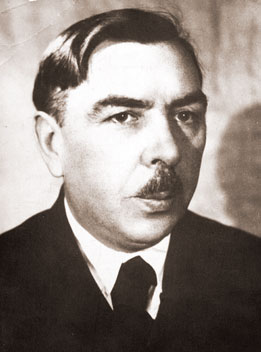
Aliaksiej Turankoŭ
Aliaksiej Jaŭlampavič Turankoŭ
1886–1958. Belarusian composer, Honoured Artist of the Belarusian SSR.
21 January 1886
Born in Saint Petersburg into the large family of a yardman.
1892
After the sudden death of his father, he was placed in a municipal orphanage for children.
1895
Sent to a school for “soldiers’ children” attached to an army regiment. He learnt to play wind instruments, the violin, and the piano. He sang in the church choir of the regimental church.
1901–1904
On the recommendation of the choir director, he attended courses at the Imperial Court Chapel. He studied harmony and counterpoint under A. Lyadov and attended the choir director’s course of M. Sokolov. At the same time he was enrolled at a school for ensigns.
1904–1909
Served his military duty as a private soldier.
1909–1911
Worked as a private tutor, sang in restaurants and church choirs. During this period he lost his entire family — his mother and eight brothers and sisters.
1911
Entered the Saint Petersburg Conservatory (class of A. Lyadov), but was forced to leave it due to poverty. He worked as a violist in the Pavlovsk orchestra under A. Glazunov. With the latter’s support he again enrolled (with the right to free tuition) in the conservatory’s composition department.
1912
Began to be published as a church composer.
His sacred works (especially those for male choir) became widely known.
1914
Graduated from the Saint Petersburg Conservatory. He was mobilised to the front.
1914–1918
During the war he continued to compose church music. He served as director of the male choir at the headquarters of Emperor Nicholas II in Mogilev.
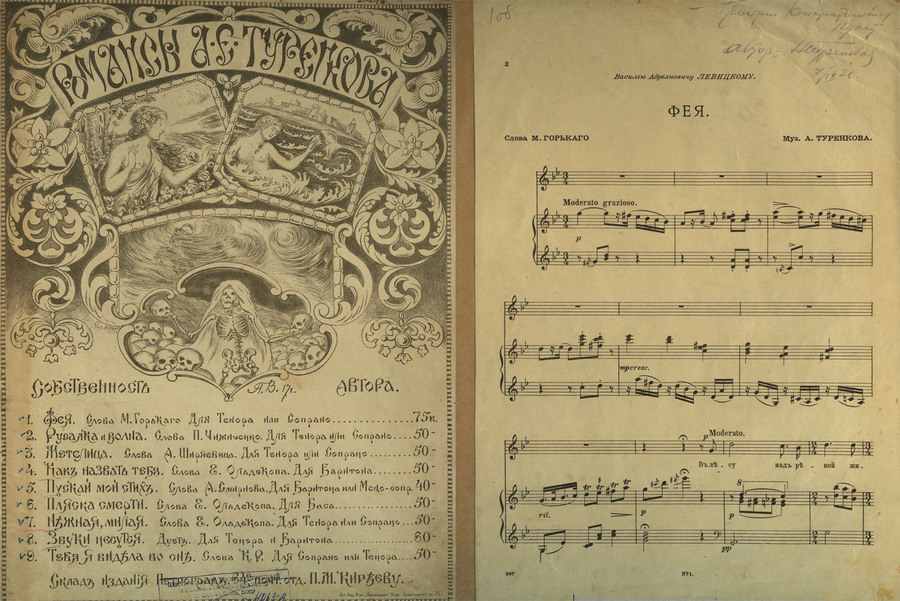
"Romances by A. Y. Turenkov", with an inscription dedicated to R. Pukst. Petrograd, 1917.
1918
Demobilised, he settled in Gomel. He married the daughter of the choir director of the Saints Peter and Paul Cathedral, Ivan Falkoŭski.
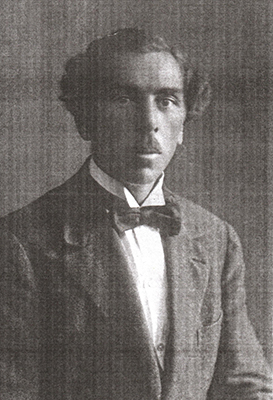
1918–1921
One of the founders of the music school and the People’s Conservatory in Gomel (later the State Musical Technical College, today’s Sakałoŭski Music College).
He worked in the symphony orchestra, directed choirs, and headed the music section of the department of public education.
1932 Became a member of the Union of Composers of the Belarusian SSR (in 1944 he lost his membership and restored it in 1955).
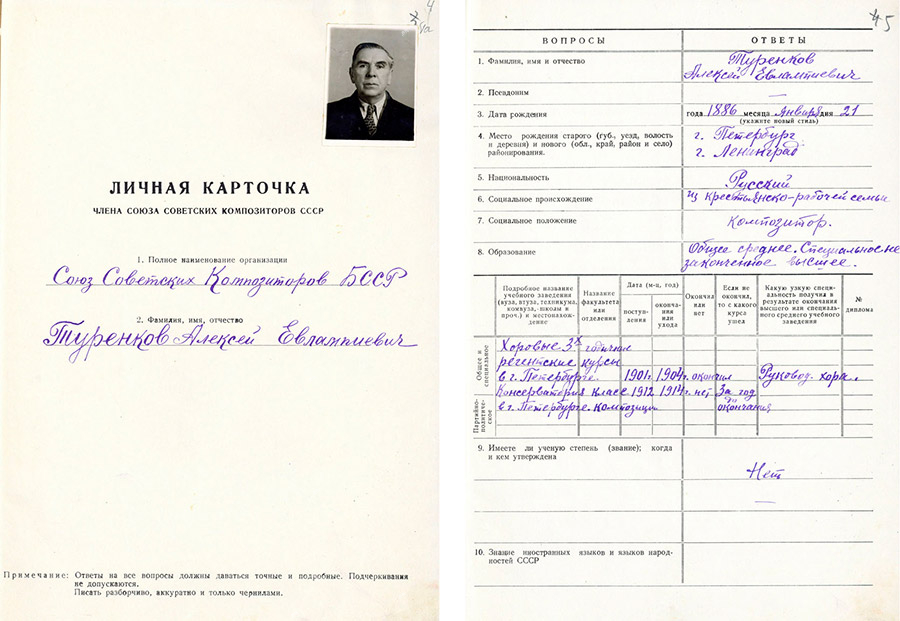
Membership card of the Union of Soviet Composers of the USSR. 1955.
1934
Moved to Minsk. He worked as a musician in the radio committee orchestra and as a violist in the symphony orchestra.
1938
Elected deputy to the Supreme Soviet of the Belarusian SSR (1st convocation).
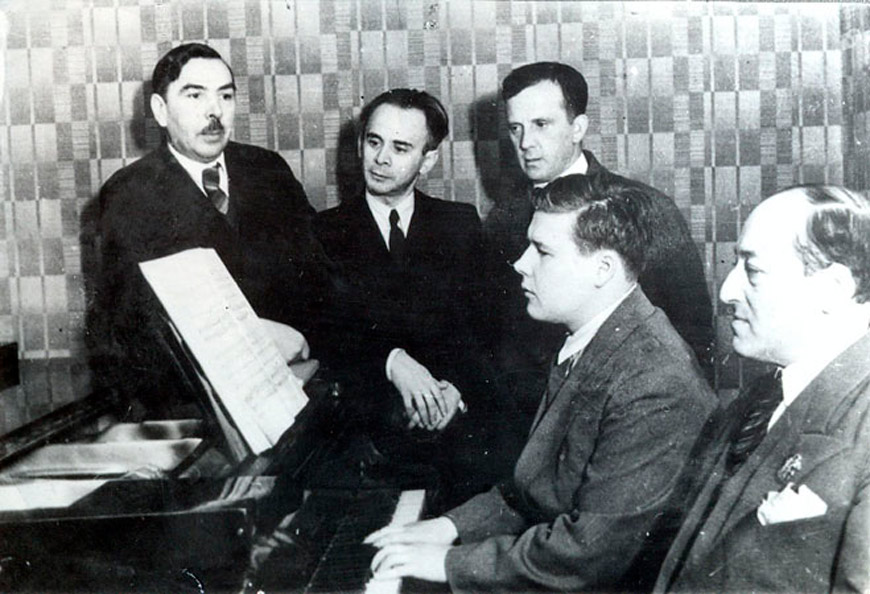
Anatol Bahatyroŭ (at the piano) introducing his colleagues to his opera "In the Forests of Polesia". First from the left — Turankoŭ. 1938.
1939
Premiere of the opera The Flower of Happiness (libretto by V. Barysievich, P. Broŭka, P. Hlebka).
1940
Awarded the Order of the Red Banner of Labour and received the title of Honoured Artist of the Belarusian SSR. He composed the Hymn to the Stalin Constitution.
June 1941
While attempting to evacuate, he came under fire from a German airborne unit. His wife was killed; he himself was wounded. He returned to Minsk.
1942–1944
Worked at the Publishing House of School Textbooks and Literature for Youth (Minsk) and at the K. Yezavitau publishing house (Riga). He collaborated with the occupation radio.
1943
Second marriage, to Ksenija Jakaŭleŭna Vaŭčok.
22 July 1944
Arrested in Minsk because, during a failed operation to lead the composer out of the city to the partisans, the partisan unit’s messenger was captured and shot.
23 June 1945
Sentenced by an extra-judicial body of the NKVD as a “collaborator with the occupiers” to 10 years in the camps and 5 years’ loss of rights, with confiscation of property.
Sent to the Gulag, where he came close to dying of starvation.
1947–1954
The exact date of his release is disputed (by some accounts 1947, by others August 1954).
He returned to Minsk, where he continued his creative work.
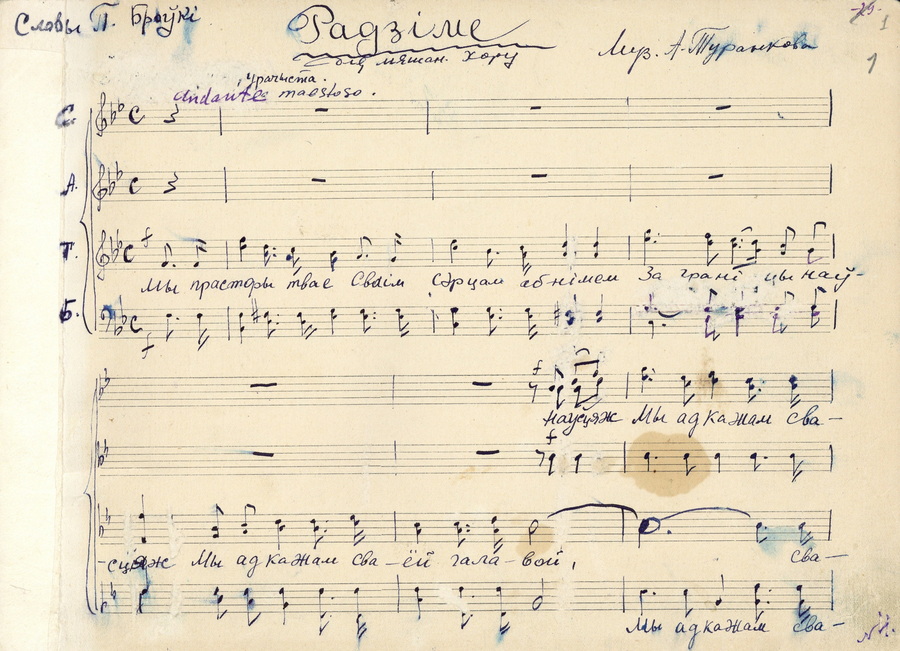
The song "To the Homeland", for mixed choir a cappella. Words by P. Broŭka. Autograph.
3 October 1955
Amnestied.
27 September 1958
Died in Minsk. Buried at the Military Cemetery.
21 October 1959
Rehabilitated posthumously.
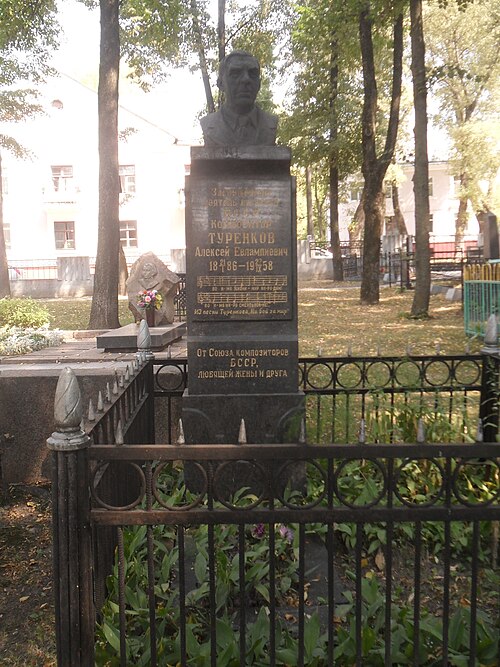
The composer's monument at the Military Cemetery in Minsk.
Aliaksiej Turankoŭ is regarded as one of the pioneers of the genres of mass song, choir, and romance in Belarusian music. Over the years of his creative work, the composer wrote more than 600 works in various genres. Operas: The Flower of Happiness (his most significant work) and Clear Dawn. The ballet A Forest Tale. Film scores: The Years of Fire, The Janush Family. Numerous romances and mass songs to verses by Soviet and Belarusian poets (Janka Kupała, Maksim Tank, and others); arrangements of folk songs. In the pre-revolutionary period Turankoŭ created a large body of sacred works (around 300 church compositions and harmonisations), which were forgotten under Soviet rule and, from the 1990s, have widely re-entered the repertoire of choirs.
Pieces by this composer
- Хвалі, душа мая, Госпада — Aliaksiej Turankoŭ ( PDF , MP3 )
- Трапар Раства — Aliaksiej Turankoŭ ( PDF , MP3 )
- Хрыстос уваскрос №2 — Aliaksiej Turankoŭ ( PDF , MP3 )
- Хрыстос уваскрос №4 — Aliaksiej Turankoŭ ( PDF , MP3 )
- Хрыстос уваскрос №3 — Aliaksiej Turankoŭ ( PDF , MP3 )
- Хрыстос уваскрос — Aliaksiej Turankoŭ ( PDF , MP3 )
- Хрыстос уваскрос №1 — Aliaksiej Turankoŭ ( PDF , MP3 )
- Кандак Раства — Aliaksiej Turankoŭ ( PDF , MP3 )
- Усе вы — Aliaksiej Turankoŭ ( PDF , MP3 )
- Міласць міру — Aliaksiej Turankoŭ ( PDF , MP3 )