
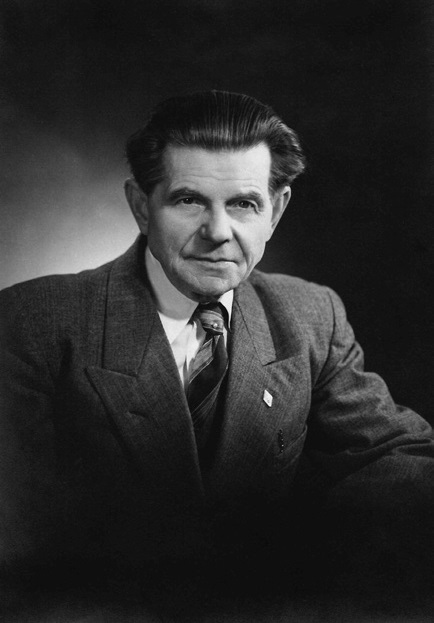
Mikola Ravienski
Mikola (Mikalai Yakaulievich) Ravienski
1886–1953. Belarusian composer, conductor, and music critic.
5 December 1886
Born on the Kaplancy estate in the Ihumień district (now Biarezino district of the Minsk region), into the poor large family of the gardener Jakub.
1891
He began to sing in the church choir, possessing a remarkably good child’s voice, musical ear, and abilities.
From 1893
Attended the village school.
1895—1903
Admitted into the Minsk Hierarchical Choir, where he received his basic general musical education.
1903
Sent to the Minsk men’s monastery as choir director.
1905
Worked in Navahrudak as director of the church choir and teacher of singing and music at schools. He collected folk songs of the Navahrudak region (the archive was lost during the Great Patriotic War).
1913(12?)—1915(14?)
Studied on the three-year choir-director course in Moscow and Saint Petersburg.
1914
Forced to leave Navahrudak in connection with the First World War and the evacuation.
1915
As a refugee he worked in military construction as a clerk, and later as supervisor of construction stores.
1917
Taught singing and music at schools in the town of Ihumień (now Červień).
1919
Worked in Minsk as the director of the church choir at St Catherine’s Cathedral, and at the same time as a teacher of singing and music at schools.
1920
On the invitation of the Belarusian Workers’ Club, he organised and worked with a Belarusian choir. Together with Uładzimir Hałubok he staged regular shows and concerts. (The director of the club was Ravienski’s own brother, who, as a “national-democrat”, perished in 1937 at the hands of the Minsk NKVD.)
1921
Took part in an expedition organised by the Institute of Belarusian Culture to collect folk songs in the Slutsk region.
1922
The first collection of songs is published — folk arrangements and his own works to texts by Belarusian poets. He set Dunin-Marcinkievič’s Zaloty (The Courtship, an operetta, since lost), and composed a cantata for choir, Kurhan (The Burial Mound), to verses by Kanstancyja Bujła.
1922
Mass arrests of the Belarusian intelligentsia (for example, Hałubok, Losik, Illučonka, Lažnievič, Kalievič, and many others, mostly railway workers). By some miracle Ravienski remained free, although his composition July Hymn to words by Duboŭka had been labelled by party officials as “national-democratic”. “It goes without saying, this wave of arrests did not pass me by either”, Ravienski writes in his memoirs.
1923
Took on the duties of chorus master at the Minsk City Theatre and was sent by the People’s Commissariat for Education to Moscow for higher musical training. There he maintained close ties with the Belarusian community, especially with Uładzimir Duboŭka, who significantly influenced his work.
1924—1930
Corresponding member of the Belarusian Academy of Sciences.
1927
Graduated from the V. V. Stasov Music College in Moscow and entered the Conservatory. During his studies at the Moscow Conservatory he composed: 22 fugues for piano (2 in two voices, 5 in three voices, 11 in four voices, and one in eight voices for performance on wood-wind instruments — flute, oboe, clarinet, and bassoon); a cantata for choir, soloists, and symphony orchestra to verses by Janka Kupała; small-form choral works, arrangements of Belarusian folk songs for choir and solo voice; the July Hymn to words by U. Duboŭka; a piano prelude. He contributed two musical-critical articles to the journal Uzvyšša. To words by U. Duboŭka he composed the large choral work O Belarus, My Wild Rose (the score was lost in 1942 and restored in emigration).
From 1929
Worked with U. Duboŭka on the opera Branisłava (in 1930 the opera was confiscated).
1930
Graduated from the Moscow Conservatory and, after being recalled by the People’s Commissariat for Education, returned to musical work in Minsk. He taught at the Minsk Music College and later at the newly founded Belarusian Conservatory. He acted as head of the research section of the Music College.
Among the large-form works of this period are music for string quartet and a suite, both built on Belarusian folk motifs, along with a series of mass songs and choral pieces. Most of the smaller works and the piano prelude were published in Minsk by the Belarusian State Publishing House.
The summer months he spent travelling through villages to record folk songs.
At a certain point colleagues stopped greeting Ravienski, who was teaching composition and harmony at the Belarusian State Conservatory.
In 1938
he was expelled from the Union of Composers of the Belarusian SSR. He was warned of imminent eviction from his apartment.
September 1940
Moved to Mogilev in an attempt to escape “the unceasing persecution for national-democratism”.
1941
Returned to Minsk.
1943
Moved from Minsk to Červień. During the Nazi occupation he was choir director of a church. At the local club he founded a large mixed choir, a women’s ensemble, and a drama group.
He composed music for church prayers. There he also re-composed music for the first and second acts of the operetta Zaloty.
1944
He moved to Minsk, where he handed in the two completed acts of Zaloty to the art department of the Belarusian Central Council. He finished the third act as well.
1944
Emigration to Germany. In the displaced-persons camp he directed a choir, and organised the Belarusian Women’s Ensemble — widely known among the emigrants — attached to the drama group Long Live Belarus.
He taught singing at the Janka Kupała Belarusian Gymnasium and at the Belarusian gymnasium in Osterhofen. He was choir director at the Orthodox parish of St Euphrosyne of Polack.
All the music materials kept in the music department were brought along, but the first act of the operetta was lost en route. As a result, this second attempt at the operetta also proved fruitless. A collection of Belarusian folk songs and his own works on words by Belarusian poets, ready for printing and consisting of 75 numbers, perished at the printer’s in a fire in Berlin.
1945—1946
In Regensburg he restored the music that had been lost in the Minsk fire — the great choral work O Belarus, My Wild Rose to words by U. Duboŭka, the arias of Branisłava from the opera Branisłava, and Night Over Minsk, both to words by U. Duboŭka.
1947
He wrote a fantasy for violin and piano on Belarusian folk themes. He also wrote an abbreviated theory of music for self-instruction.
1947
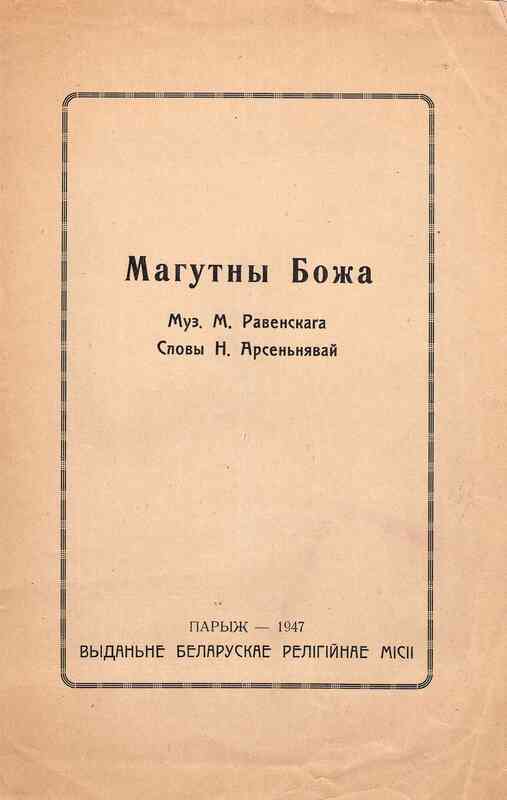
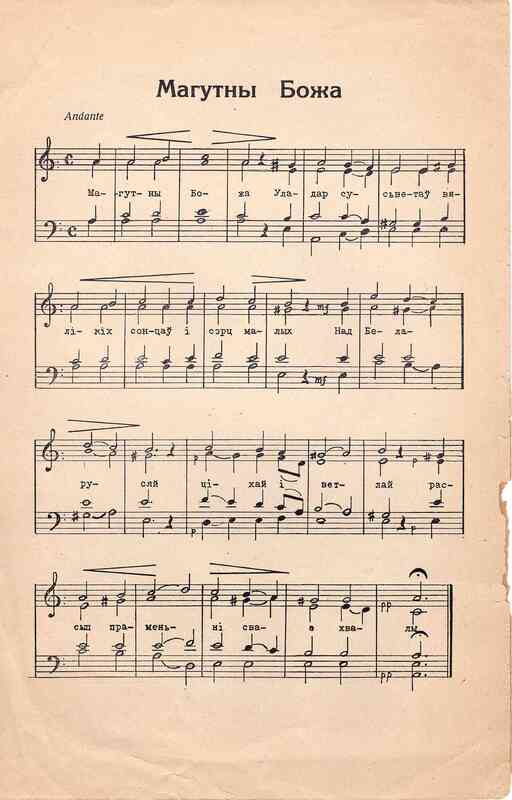
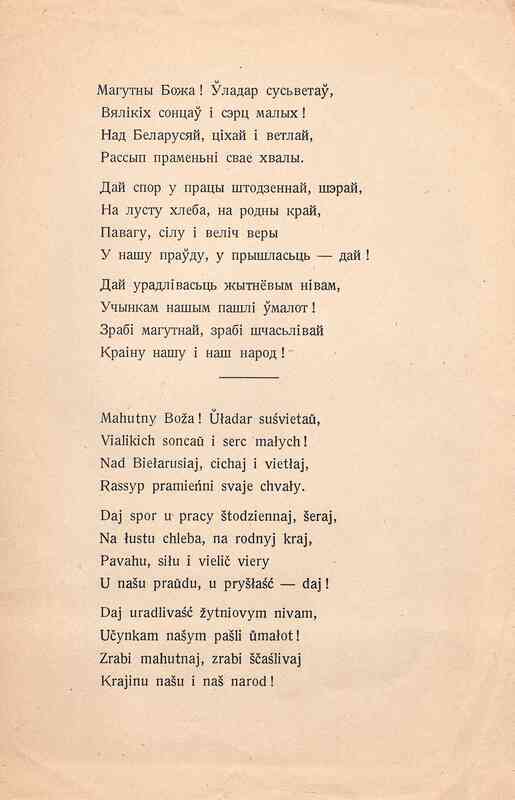
He composed the music to N. Arseńnieva’s words Mahutny Boža (Almighty God).
|
|
|
1948
Stage music for the plays Pinsk Gentry, Unexpected Betrothal, and The Cheerful Craftsman. Arrangements of a number of Belarusian folk songs for choir and ensemble.
1950
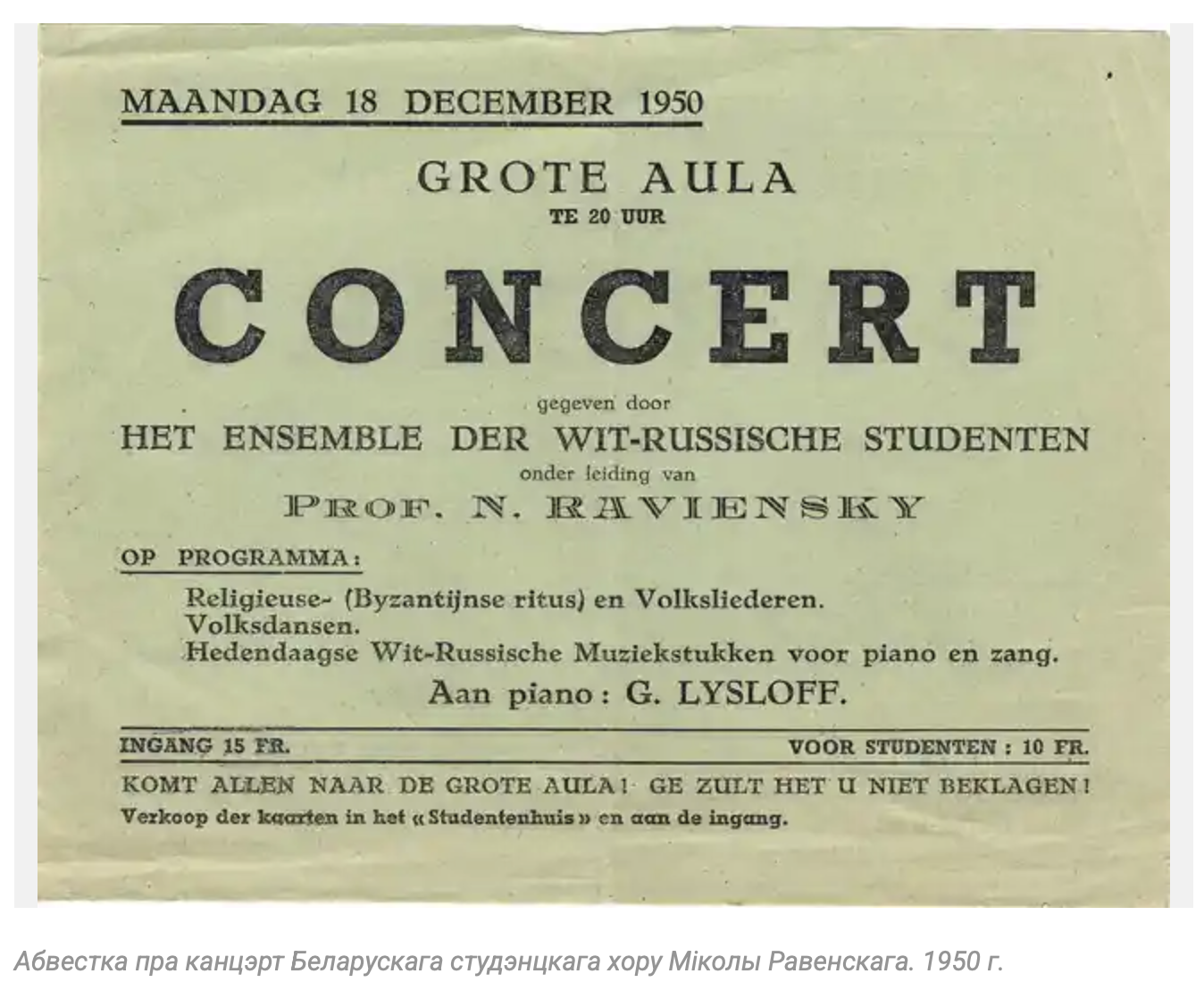
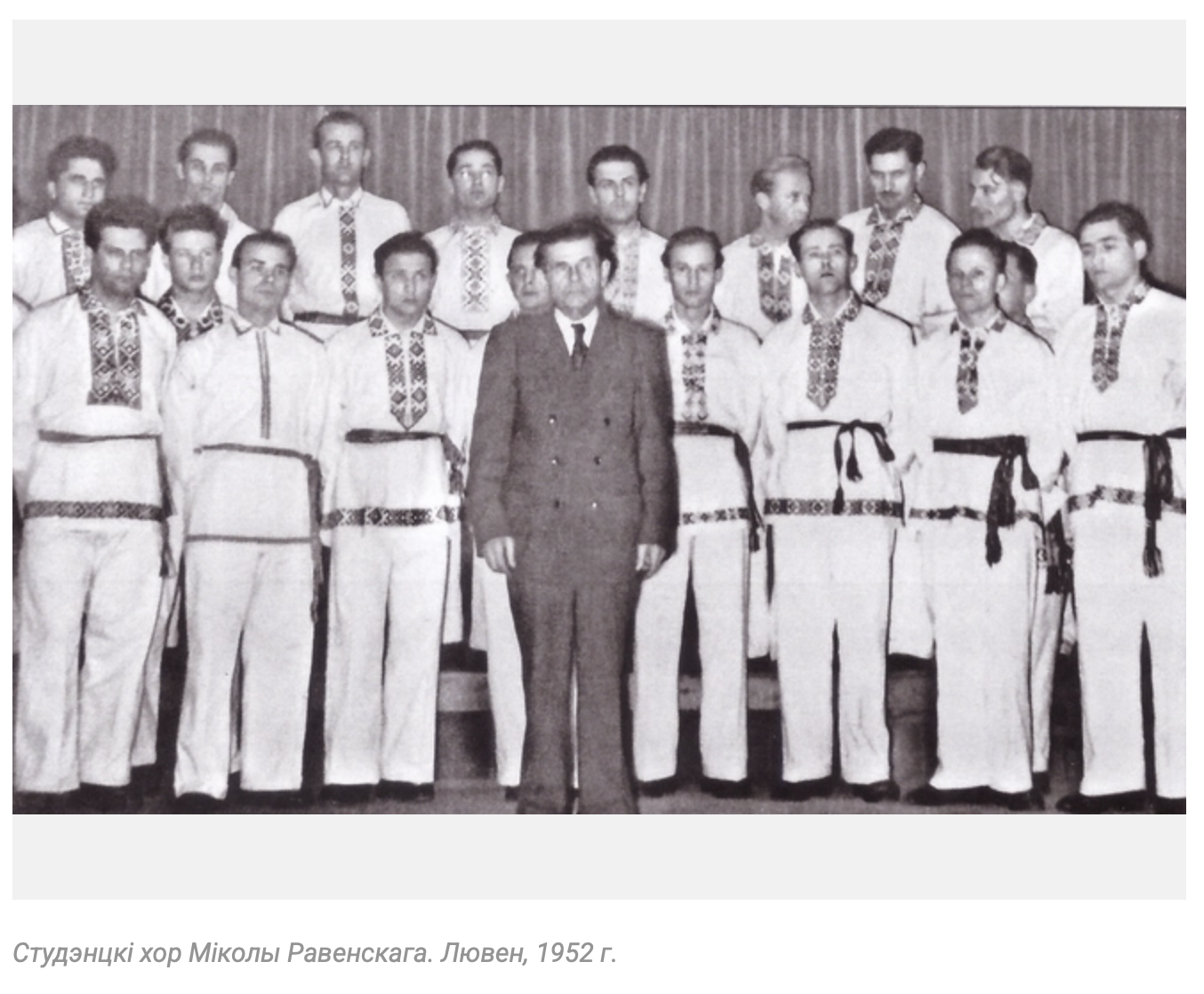
Moved to Belgium. Invited to Leuven University, where he created a student ensemble of Belarusian music. He performed with it in Belgium, France, and Germany, and recorded gramophone discs of Belarusian secular and religious songs. He collaborated with the Belarusian Institute of Arts and Sciences.
He composed Grand Suite for piano on Belarusian folk themes, a three-voice piano fugue In Exile, the choral piece for male ensemble The Weavers of Slutsk with baritone solo accompanied by ensemble and piano, Why Should I Not Sing in an extended setting, also accompanied by piano, and the songs Frost, The Mosquito’s Wedding, Oh, on the Green Sea, In the Evening Beyond the River, The Strip, Hops Along the Meadows, The Willow, Chalimon, Granny, Oh, I Lead Sorrow, and Pahonia — all accompanied by piano.
He composed two odes for male voices, a Belarusian lullaby for women’s quartet and piano, My Native Corner — a duet for women’s voices and piano, choral arrangements of a number of Belarusian folk songs, short choral works, scout pieces, and pieces for women’s ensemble.
He arranged the folk songs You, Red Guelder Rose, My Dear Land, The Song of the Bobyl, and many others, all with piano accompaniment. From the operetta Zaloty he restored Sabkovich’s song I Have Money, I Have…. He arranged the folk song A Man Beats His Wife, Whips Her for solo voice and piano. For accordion he arranged the music of Lavoniha, Kryžačok, Miacielica, and two Belarusian polkas.
1951
He wrote a large work on Belarusian folk themes entitled L’exil. He collected 270 Belarusian folk songs. A collection of Belarusian folk songs, consisting of 80 numbers, was prepared for publication.
In addition, over the years he had composed church music: two settings of We Who Mystically Represent the Cherubim, Bless the Lord, O My Soul, In Thy Kingdom, A Mercy of Peace, I Believe for choir and baritone solo, Our Father, It Is Truly Meet, Praise the Lord, Many Years, the litanies (great, fervent, and of supplication), and a short concerto Glory to God in the Highest.
9 March 1953
Died of cancer.
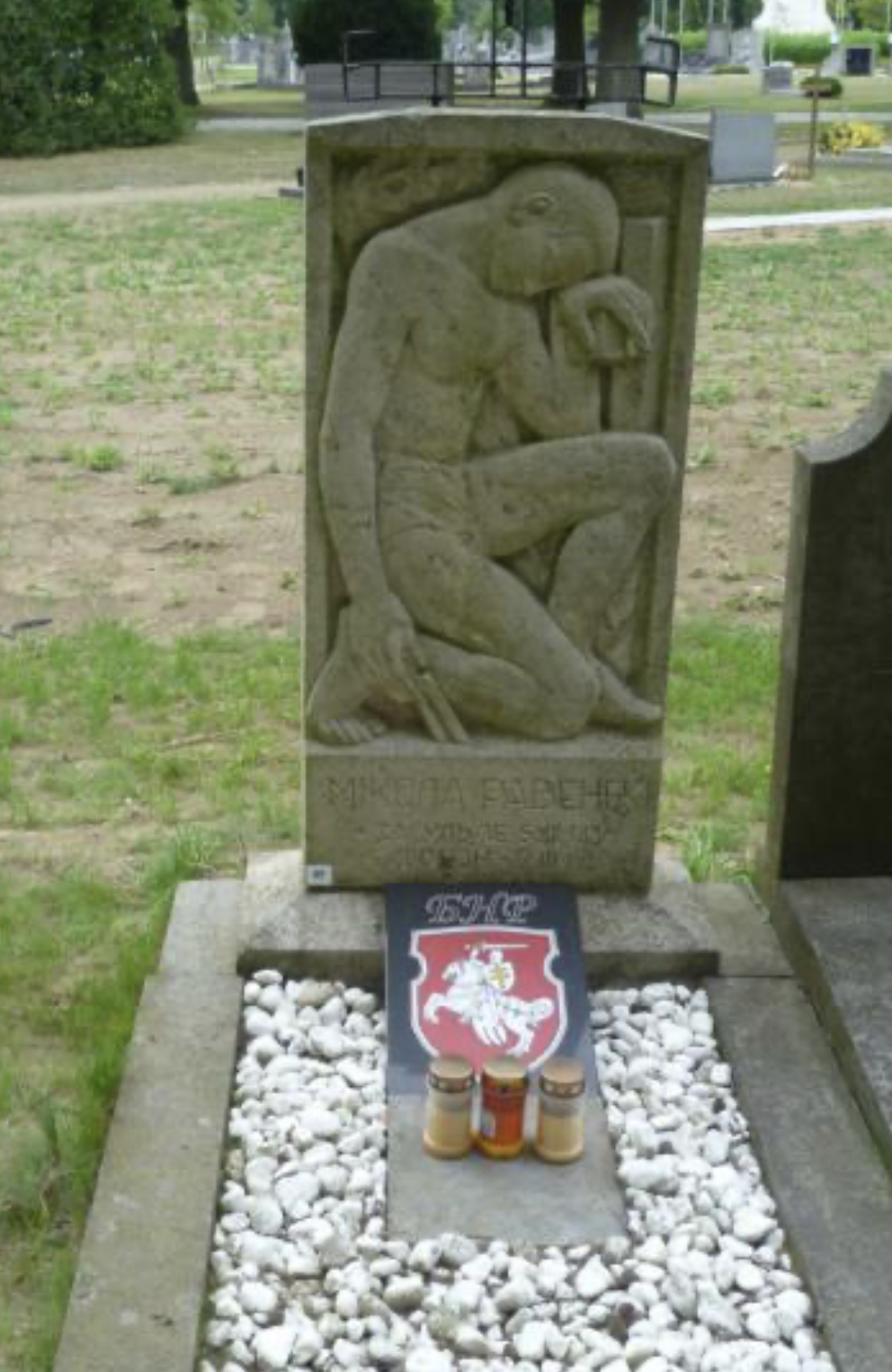
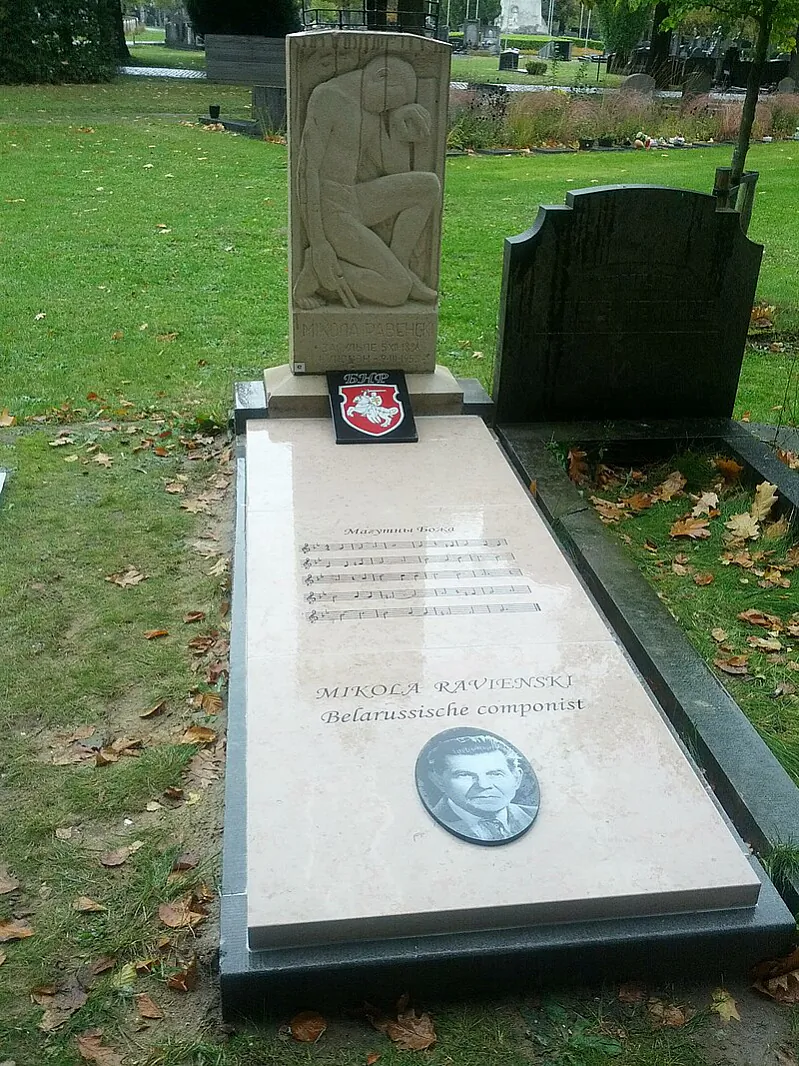
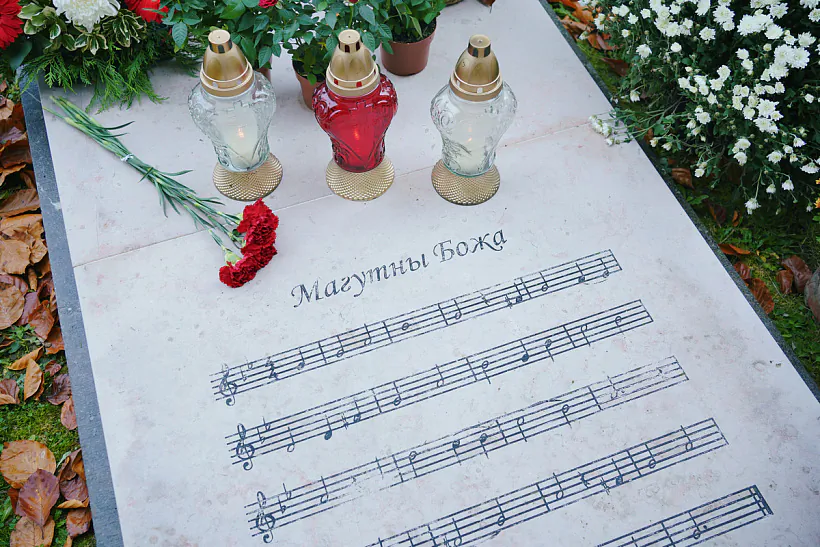
On his grave in Leuven stands a monument by the Belarusian sculptor Michas Naumovič from Paris, with a plaque bearing the Pahonia coat of arms and a slab with the score of the hymn Mahutny Boža.
|
|
|
(The first photograph shows the original appearance of the monument.)
The circumstances of the composer's life all too often turned against him — his musical works perished in fires, were lost in moves from one country to another, and disappeared forever in the claws of the GPU…
He tried to fight against fate, restoring lost music from memory — but sometimes only to lose it again. In a contribution by Aleś Karpovič, The Berlin Ballad, another such incident with a work by Mikoła Ravienski is recounted:
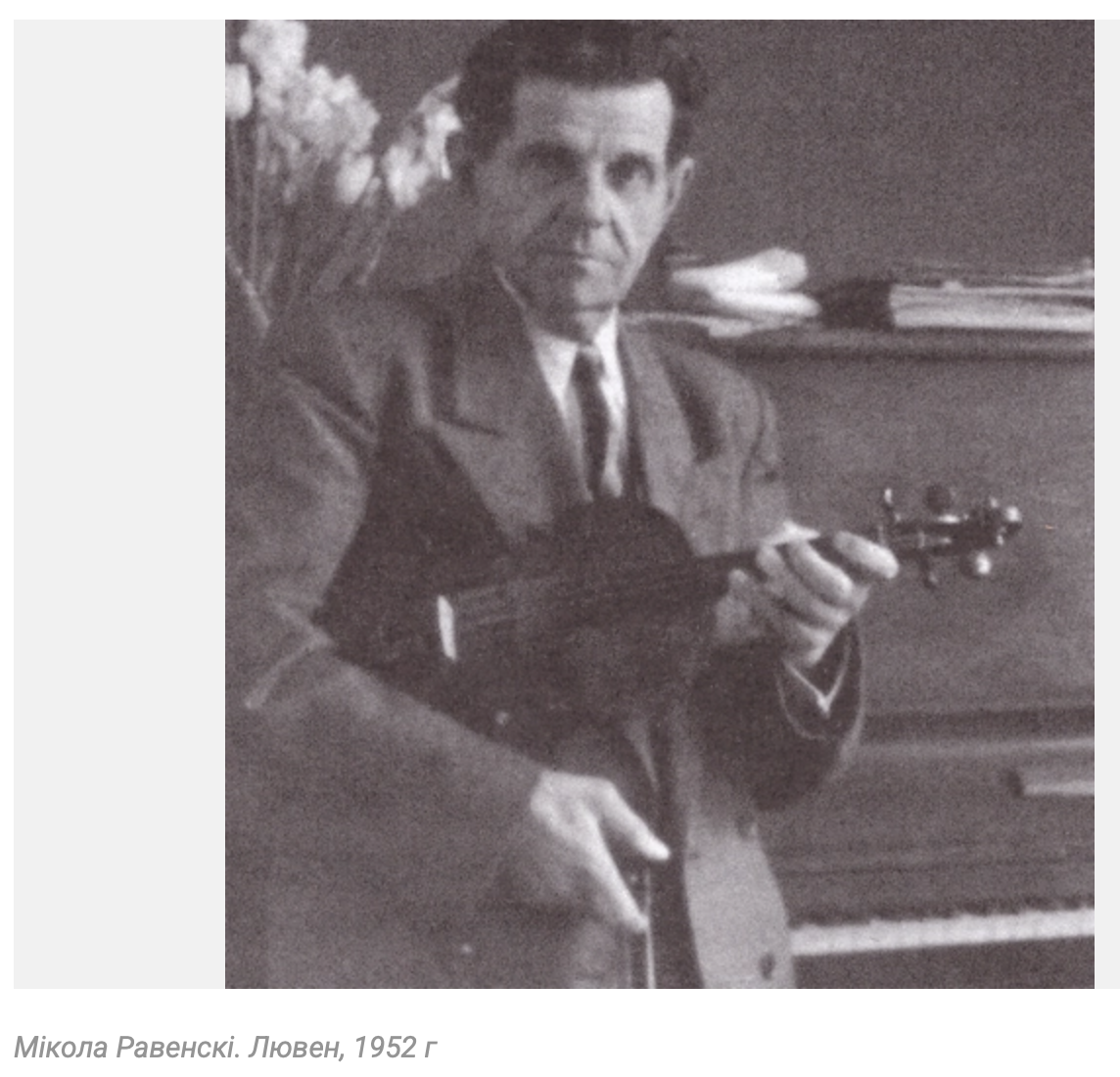
“And it was just at that time (right at the end of the Second World War) that the composer finished a new work — a ‘Ballade on a Belarusian Theme for Violin and Piano’. Like everyone who heard it, I loved this work — a warm, lyrical melody, with heartfelt depth of feeling sounding in the ‘Ballade’, and Ravienski and I played it through many times. On one January Sunday (I believe it was the Theophany), the cadets of the Battalion held a friendly evening. The choir performed, along with reciters and solo singers; the atmosphere was very warm and pleasant, and even a couple of air-raid alarms, during which the programme was interrupted and performers and listeners took shelter in the bomb shelters, could not dampen the mood. At this evening, Mikoła Ravienski wanted to perform his ‘Ballade’ for the first time. He had prepared it to perfection, which took much effort on his part, since the ‘Ballade’ was technically quite complex. But a completely unforeseen accident prevented this work from being heard. Just at the moment when the composer, violin in hand, was walking up to the improvised stage, the violin slipped from his hands and fell to the floor — in such an unlucky way that the neck broke off completely from the body. It was impossible to find another violin under those conditions, and so the ‘Ballade’ remained unperformed… Some time later, Ravienski handed in to the printer’s, together with the manuscript of an already prepared collection of Belarusian songs, the manuscript of the ‘Ballade’. But a fire during one of the bombardments destroyed, together with the printer’s, both the collection and that unlucky ‘Ballade’… Later on, several times Mikoła Ravienski returned to the idea of restoring the ‘Ballade’ from memory — and it certainly deserved this — but other creative projects always pushed it off the ‘agenda’. A part of the music of the ‘Ballade’ was used by Ravienski in his ‘Fantasy’ for violin, but the wish to recreate it in full never left the composer, and even at the time of our last meeting in Leuven he spoke of it. But this time pitiless death intervened. The Berlin ‘Ballade’ of Ravienski went silent together with his life…”
|
|
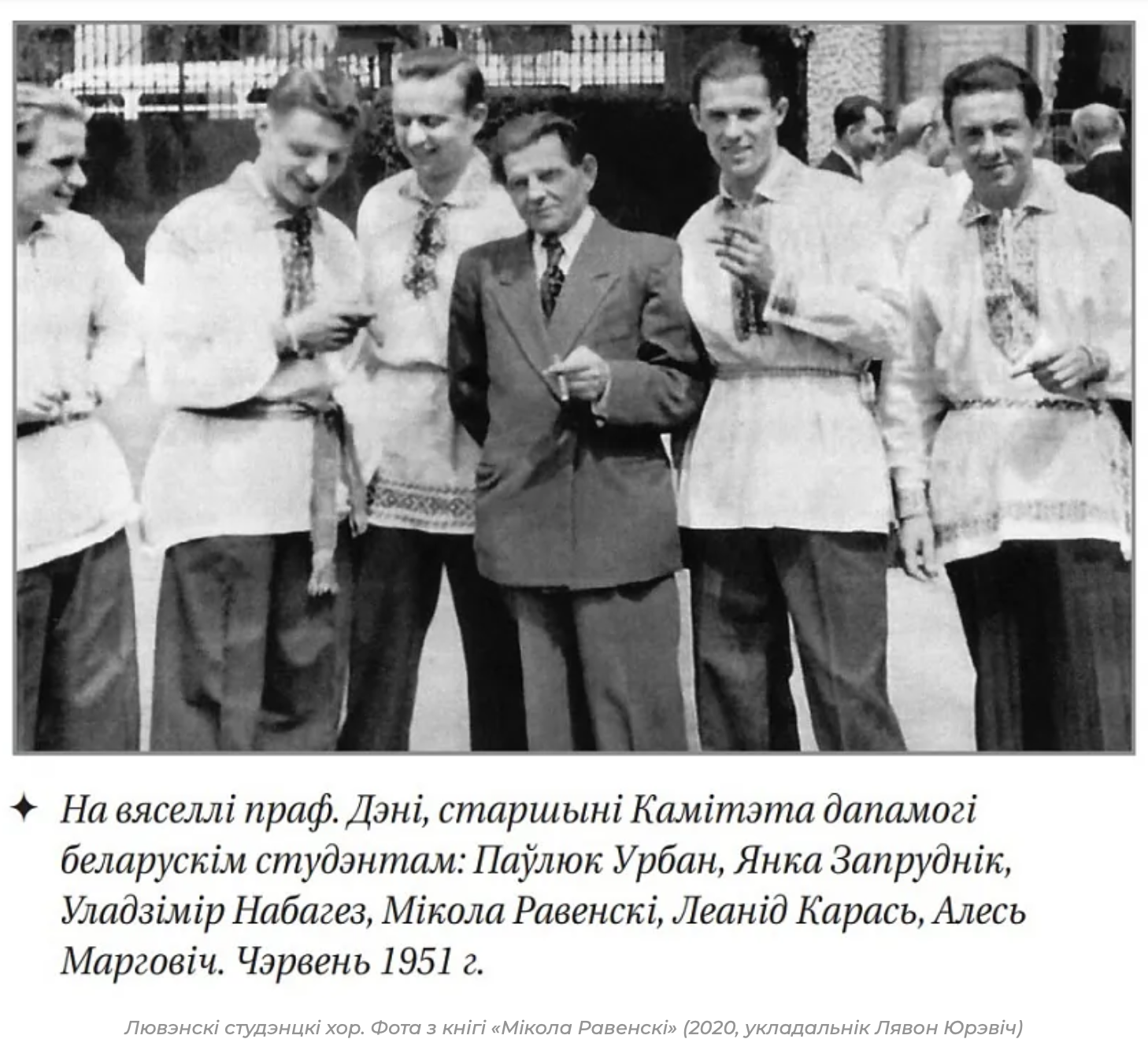
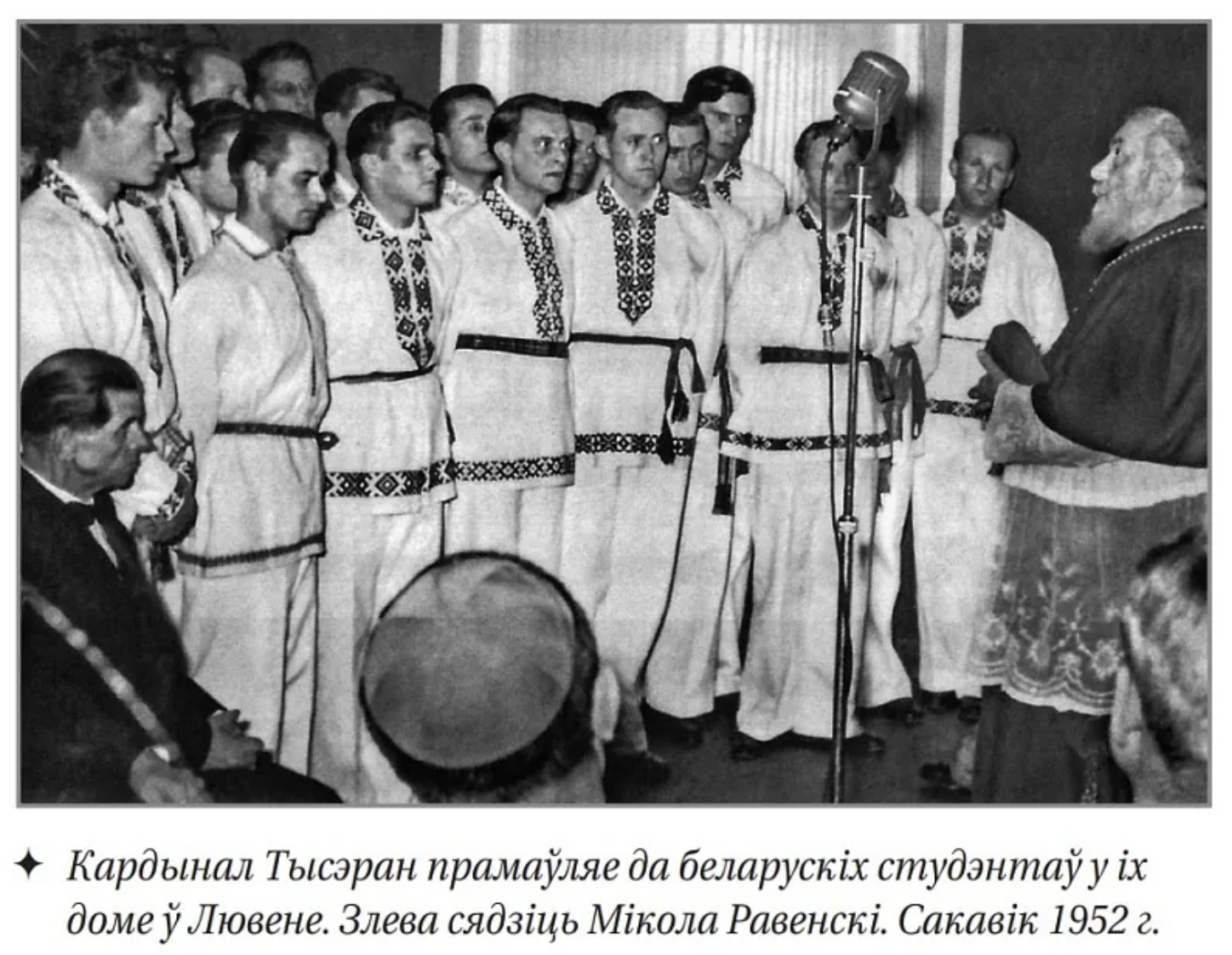
The composer moved to the city of Leuven from Germany in June 1950; from September the student choir began rehearsals, and by December was already giving major concerts. In just three months of intensive rehearsals, Ravienski was able to forge an almost professional ensemble out of untrained amateurs. The choir’s performance schedule was very dense, and its repertoire impressed with its complexity and variety. Rarely did a concert go by without an encore. Here is a note that Vasil Ščećka left in his diary, describing one of the concerts in February 1952:
“10 February 1952. The ensemble gave a concert at the Collège du Sacré-Cœur in Brussels. The hall was very poor, but the concert was a tremendous success. The hall was packed, and we were received with enthusiasm. Three songs were encored: ‘Oh, I Lead Sorrow’, ‘Granny’, and ‘Pahonia’. There were many admirers of our art. The whole concert was recorded on tape. Father Robert was the master of ceremonies. He used his abilities to present the BSE (Belarusian Student Ensemble) as one of the best in Belgium and, among Belarusians, as the most active in emigration. Before the concert Fr Robert gave a brief account of what Belarus and the Belarusians are. His words were strong and patriotic.”
To the entry on the concert that took place on 15 December 1952 and “went extremely well” — that is, was very successful — there is a single-sentence postscript: “Somewhere around this time Prof. Ravienski fell ill.”
Less than three months sufficed for the illness to complete its destructive work — on 9 March 1953 the life’s path of the talented composer and choirmaster came to an abrupt end.
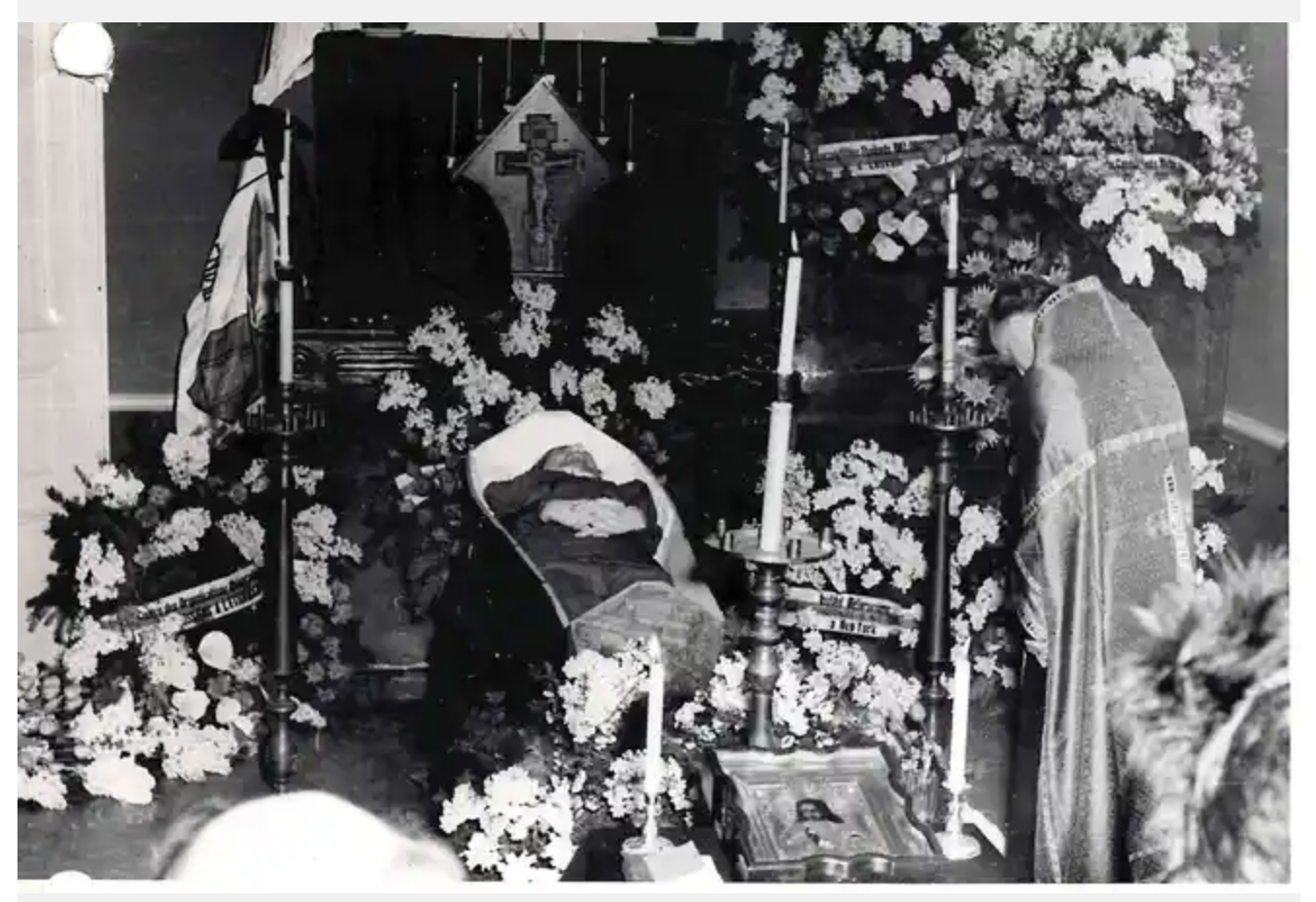
|
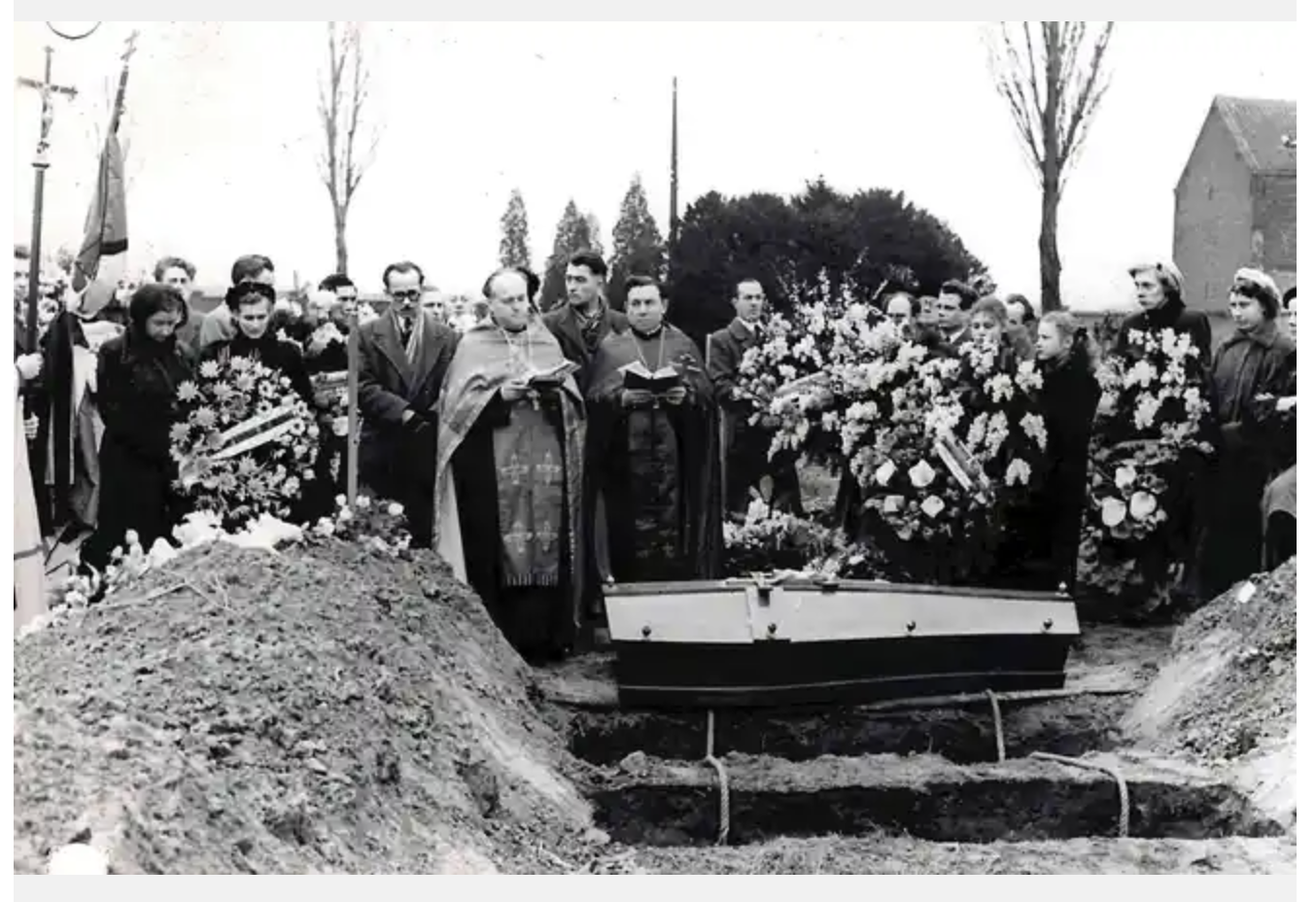
|
Mikoła Ravienski was a member of the Council of the Belarusian Democratic Republic (BNR) in exile, maintained ties with other Belarusian diasporas, and in particular kept up an active correspondence with the Belarusian Institute of Arts and Sciences in New York. His activity was covered by the newspaper of the Francis Skaryna Krivich Society in New York, Vieda. On Ravienski’s death, Vieda published an obituary in which it called him a Krivich of high ideals.
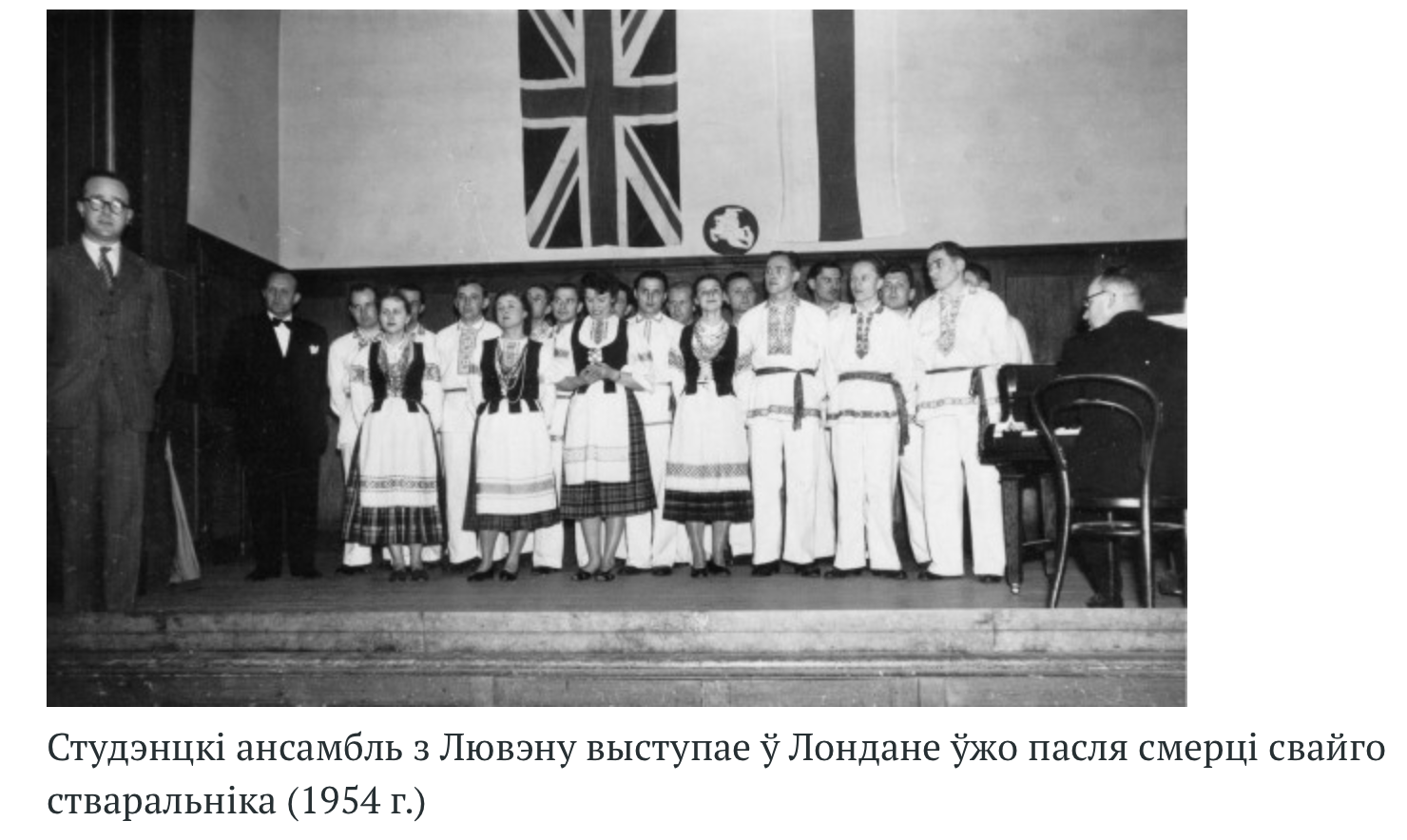
Pieces by this composer
- Хвалі, душа мая, Госпада — Mikola Ravienski ( PDF , MP3 )
- Міласць міру — Mikola Ravienski ( PDF , MP3 )
- Ойча наш — Mikola Ravienski ( PDF , MP3 )
- Магутны Божа — Mikola Ravienski ( PDF , MP3 )